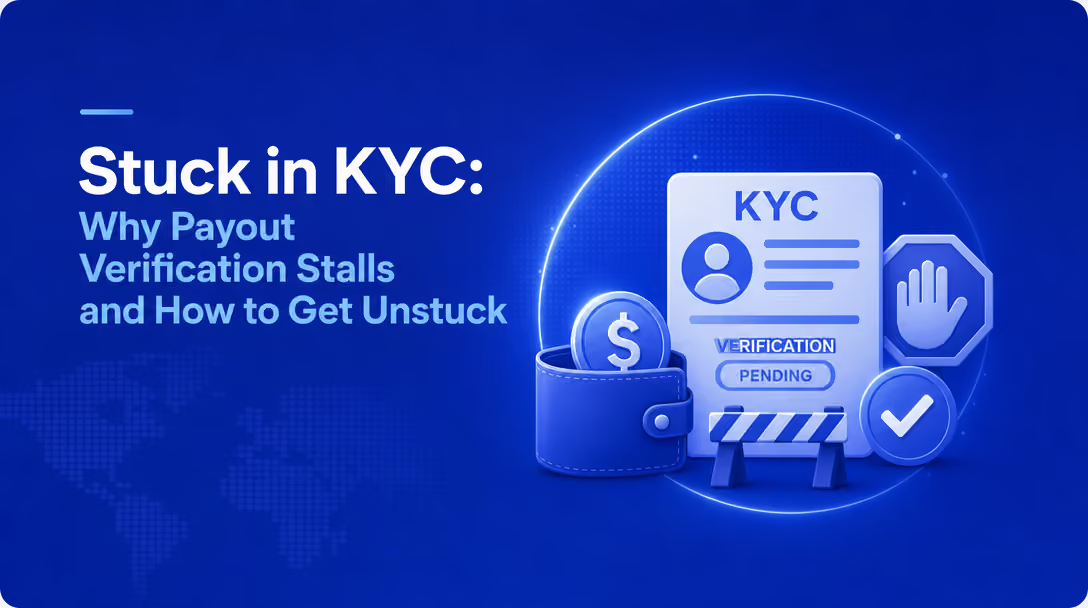
Stuck in KYC: Why Payout Verification Stalls and How to Get Unstuck
A pending or rejected KYC check is the most common reason a prop firm payout stalls. Here is why it happens, how to fix it, and what to expect from a provider.

.avif)
Your payout says pending. The hold-up is identity verification, not your money. KYC is the reason a payout is compliant and protected, but when it stalls with no explanation, a trader sits there unable to withdraw what they earned. Here is why it happens and how to clear it.
TL;DR
- KYC stalls a payout when verification is pending, rejected, or never finished, because funds cannot legally move until the trader is verified.
- Most cases clear with clean, current documents whose name matches the account exactly.
- KYC is getting stricter in 2026 as payment processors and regulators tighten payout checks, so unprepared traders hit more rejected documents and frozen withdrawals.
- If you are rejected, ask the provider for the specific reason, not a generic decline.
- Repeated, unexplained KYC stalls across many traders point to a provider process problem, not a trader problem.
KYC stalls a payout when identity verification is pending, rejected, or never finished, because funds cannot legally move until the trader is verified. Most cases clear by submitting clean documents, fixing mismatched details, and getting a specific reason for any rejection. A good provider verifies fast and explains rejections clearly instead of leaving traders guessing.
Why does KYC stall a payout?
Verification has to clear before funds can move, and it stalls for a few predictable reasons.
| Cause | Whose side | How it clears |
|---|---|---|
| Documents blurry, expired, or name does not match the account | Trader | Resubmit clean, current documents with an exact name match |
| Check stuck in manual review | Provider | Ask for a status and a committed timeline |
| Provider slow to process or slow to explain a rejection | Provider | A pattern here is a reason to reassess the provider |
The first row is on the trader. The other two are on the provider. The distinction matters, because the fix is different for each. A trader can fix a blurry document in minutes. A trader cannot fix a provider that takes four days to read it.
Why is KYC getting stricter in 2026?
The checks are tightening, and the pressure is coming from above the prop firm. Payment processors and banking partners that move payout money have raised their own verification standards, and they pass that requirement straight down the chain to the firms and traders they serve. Regulators across major payout corridors have narrowed what counts as an acceptable identity check, which means documents that cleared a year ago now get kicked back.
For traders, the practical effect is more friction at exactly the wrong moment. A check that used to pass on the first try now bounces over a detail that did not matter before, like an out-of-date address or a name format that no longer matches. For firms, it means a verification step that worked quietly for years can start generating support tickets without anything changing on your side. The standard moved. Your process did not.
The takeaway is preparation. Verify identity before the first payout request, not during it, so a tighter check does not collide with a trader who needs the money this week.
How do you get unstuck as a trader?
Submit clear, current documents where the name matches your account exactly. If you are rejected, ask the provider for the specific reason, not a generic decline. A real provider can tell you which field failed. Have your ID and details ready before your first request, so verification is not happening under time pressure. Keep a record of what you sent and when. If the rejection makes no sense and support cannot explain it, the problem is on their side, not yours.
When is the delay the provider's fault?
Healthy KYC is fast and clear. If checks routinely sit for days, if rejections come with no reason, or if support cannot tell you what is missing, that is a process problem on their side. Providers fall into two camps here. The strong ones verify quickly and tell a trader exactly what to fix. The weak ones run slow, opaque KYC that leaves traders guessing and firms fielding the complaints. A slowing or unexplained verification process across many traders is a provider problem, not a trader problem. One slow check is bad luck. A pattern is a tell.
What should firms demand of a provider's verification process?
A firm carries the trader relationship, so the provider's KYC quality becomes the firm's reputation. Ask the hard questions before you sign, not after a freeze.
How long does verification take on average, and what is the worst case. Whether rejections come with a clear, fixable reason or a generic decline. Who holds the compliance responsibility and the counterparty relationship, so you know whose name is on the regulatory hook. How the provider keeps pace with tightening processor and regulator standards, because a verification process that does not update will start failing your traders without warning. And how traders in different countries are handled, since coverage gaps cause quiet delays that look like KYC problems but are really coverage problems. A provider that answers all of these in plain language is one tier. A provider that gets vague is showing you the support your traders will get on their worst day.
How Toku fits
Toku handles KYC and the contractor relationship inside one compliant payout flow in fiat and stablecoin (USDC and USDT) across 100+ countries. Traders complete a one-time identity verification, typically in a few minutes, and after that payouts move without re-verification. They get paid into the same wallet each time, with no separate accounts and no giving up custody. As payment-processor and regulator checks tighten, verification runs once at onboarding rather than ambushing a trader mid-withdrawal, and a cleared trader keeps getting paid same-day, in seconds on stablecoin rails, without clearing the same hurdle twice.
Toku provides compliance infrastructure and is not a law firm. This content is for informational purposes only and does not constitute legal or tax advice.
Frequently Asked Questions
Why is my payout stuck in KYC?
Verification is pending, rejected, or incomplete, and funds cannot release until it clears. Confirm your documents are clean and current, and ask the provider for a status if it has been sitting.
How do I fix a rejected KYC?
Ask the provider for the specific reason, then resubmit clear, current documents that match your account exactly. A provider that cannot tell you which field failed is the real problem.
Is slow KYC normal?
Short reviews are normal. Repeated, unexplained delays point to a provider process problem, not something you did wrong.
Why is KYC getting harder in 2026?
Payment processors and regulators have tightened payout verification standards, so documents that passed before can now get rejected. Verify before your first request so a stricter check does not hold up money you have already earned.
Why does my name need to match exactly?
Mismatched names between your ID and your account are a common automatic rejection, so they need to line up before you submit.
Can KYC delays affect a whole firm?
Yes. If a provider is slow to verify across many traders, the firm feels it as widespread payout delays and fields the complaints, even though it did nothing wrong.
Do I have to redo KYC for every payout?
You should not. With a provider built for recurring payouts, identity verification is a one-time step at onboarding, and cleared traders get paid after that without re-verifying each time.
What should a firm ask a provider about KYC?
Average and worst-case verification time, whether rejections come with a fixable reason, who holds compliance responsibility, how the provider keeps up with tightening standards, and how different countries are handled.
Clear KYC once, get paid every time after
KYC should be a one-time step, not a recurring hurdle on every payout, and it should not get harder to clear as the standards tighten around it. Bring the countries your traders are in, and we will walk through how verification and payouts work on Toku.
Related reading: Why Is My Prop Firm Payout Delayed? · KYC and Compliance for Prop Firm Payouts · When Your Payout Support Goes Silent
This article is part of our complete guide to Prop Firm Payouts.
Related articles

Latest Case Study